How it works
Spot it. Remove it. Record it.
Lantern Hunt is a free iPhone app for finding, removing, and recording spotted lanternflies. This page walks through it, from learning what to look for to an approved removal on the map.
Identification
Know what you’re looking for.
The app records two kinds of removal, adults and egg masses. Nymphs are worth knowing too. Black nymphs appear in late spring, and red ones mean adults are only weeks away.
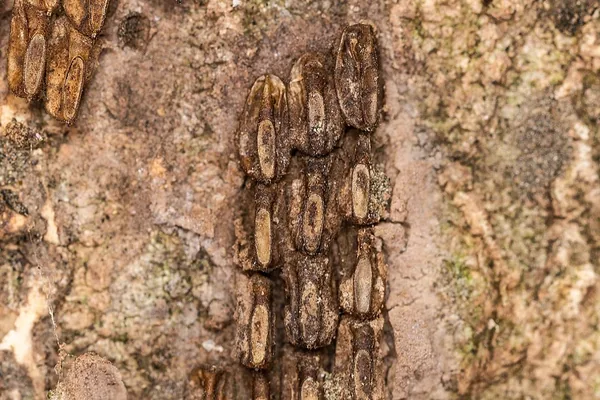
Egg mass
Rows of seed-shaped eggs, 30 to 50 in a mass about an inch long. Fresh masses are covered by a gray, mud-like coating that cracks and wears away, showing the rows beneath. Look on tree bark, stone, vehicles, and outdoor equipment from fall to spring. Credit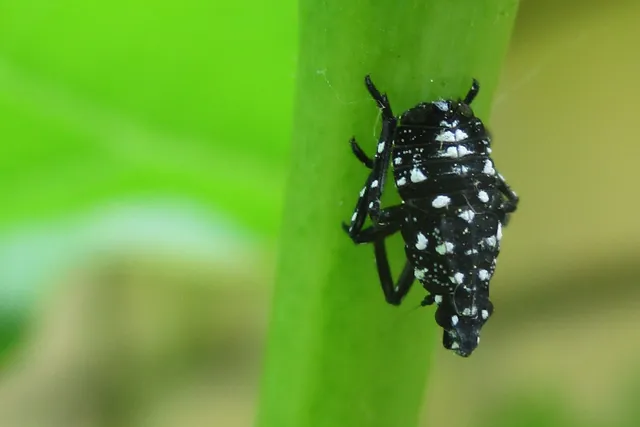
Early-stage nymph
Black with white spots. Hatches in May and molts through three black stages, feeding on the tender growth of many plants, before turning red. Credit
Late-stage nymph
In its fourth and final nymph stage, usually in July, it turns red with black and white markings. Credit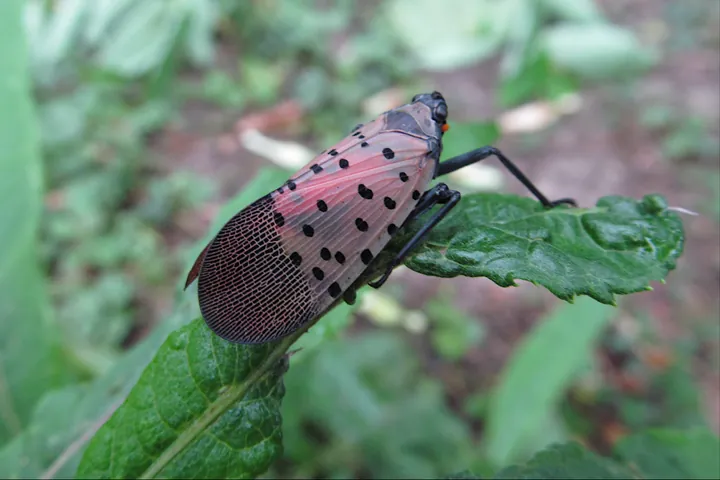
Adult
About an inch long, with gray-tan front wings marked by black spots. Red hind wings show when it opens its wings. Present from mid-July until the first hard freezes of late fall. CreditWhen to look
| Life stage | JAN | FEB | MAR | APR | MAY | JUN | JUL | AUG | SEP | OCT | NOV | DEC |
|---|---|---|---|---|---|---|---|---|---|---|---|---|
| Egg masses | present | present | present | present | hatching | laying begins | present | present | present | |||
| Nymphs, black | present | present | present | |||||||||
| Nymphs, red | present | |||||||||||
| Adults | from mid-July | present | present | present | present | present |
One generation a year. Eggs are laid from September into early December and hatch in May. Adults die with the first hard freeze. Timing is based on Pennsylvania and varies by region and year. Sources: UMass Extension; Purdue Extension; USDA APHIS.
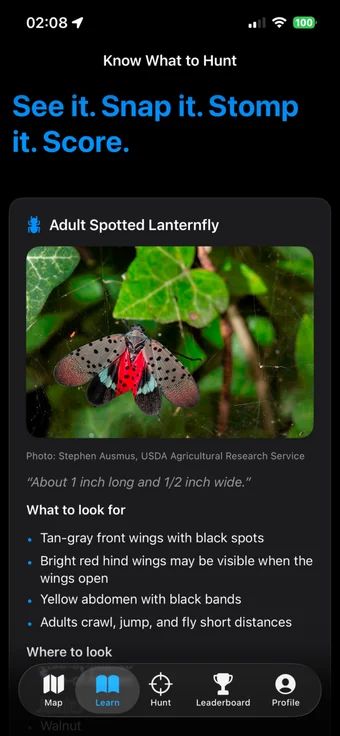
From sighting to reward
Five steps, one record.
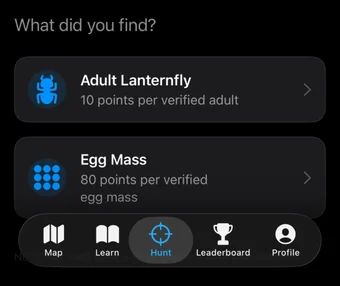
Choose what you found
Start a hunt and pick adult lanternflies or an egg mass, then enter how many you removed.
Photograph before and after
One photo shows what you found. The second shows it removed. The app saves the time each photo was taken.
Submit with location
The app attaches the removal’s location from your phone’s location services, with its GPS accuracy estimate.
Wait for review
A reviewer approves or rejects each submission. Approved removals earn points and appear on the in-app community map. How review works
Earn a cash reward
As Lantern Hunt launches sponsor-funded bounty programs, approved removals will also earn cash, with amounts set by each sponsor. The current app awards points. How sponsorship works
Sponsors can pay people to remove invasive species.
Lantern Hunt already has ordinary people finding, removing, photographing, and submitting an invasive species, and every submission is reviewed. The next step is to let sponsors pay for that work. Government agencies, conservation organizations, agricultural businesses, and other funders could offer cash rewards for verified removals, set by species, area, season, or conservation priority.
01
People remove
Ordinary people find and remove a harmful invasive species, just as they do in the app today.
02
They submit proof
Each removal goes in with a before and an after photo, the quantity, and the location.
03
Lantern Hunt verifies
A reviewer approves or rejects every submission. Only approved removals would be paid.
04
Sponsors pay for results
A sponsor funds rewards for the species and places it chooses and pays only for verified removals.
Why fund removal this way
Pay only for results
Money goes to removals that have been photographed and approved.
Direct effort where it counts
Higher rewards for a priority species, a vulnerable watershed, a vineyard edge, or egg-mass season draw people to the removals that do the most good.
Reach far more people
A reward open to anyone with a phone can put far more hands to work than a crew of staff or contractors.
See what the money did
Sponsors receive a report and map of the verified removals their funding paid for.
Today, participants earn points. Cash rewards will begin as sponsors fund them. How a sponsored campaign would work
Rewards
Paying people for the removals that matter most.
A bounty doesn’t have to pay the same for every removal. Sponsored programs can pay more for the ones that do the most good: a newly arrived species, a priority watershed or vineyard edge, the weeks before eggs hatch, or an egg mass instead of a single adult. Higher rewards draw people’s effort to exactly those places and moments.
An egg mass holds 30 to 50 eggs, so destroying one before it hatches prevents far more lanternflies than removing a single adult.
The app’s points already follow the same logic.
- Verified adult
- 10 points
- Verified egg mass
- 80 points
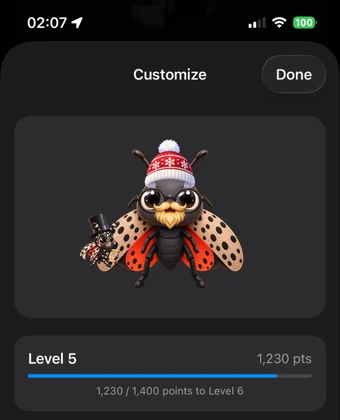
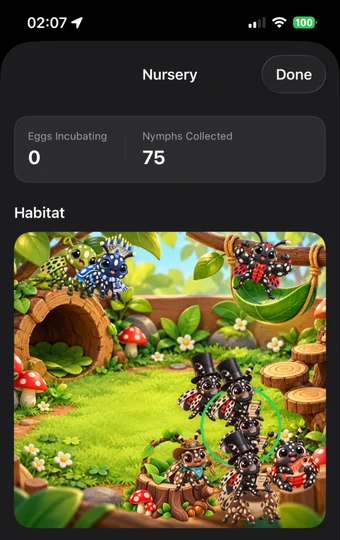
Points also feed a leaderboard, streaks, an avatar, and collectible nymph companions, which already keep people taking part.
In the field
Hunt responsibly.
Lantern Hunt is one part of a much larger effort led by state and federal programs. Their guidance comes first.
- Follow your state or local authorities’ guidance on spotted lanternflies, including any quarantine rules about moving vehicles, firewood, and outdoor items.
- Report sightings through your state’s official channel as well. USDA APHIS asks people who find spotted lanternflies to report them to their state. Find your state contact.
- Search only on property where you have permission to be.
- Watch for traffic, uneven ground, and other hazards, and take care around trees and ladders.
- Kill only insects you have identified as spotted lanternflies. Check the guide above if you are unsure.
Start your first hunt.
Free on iPhone. Accounts require no name or email address.