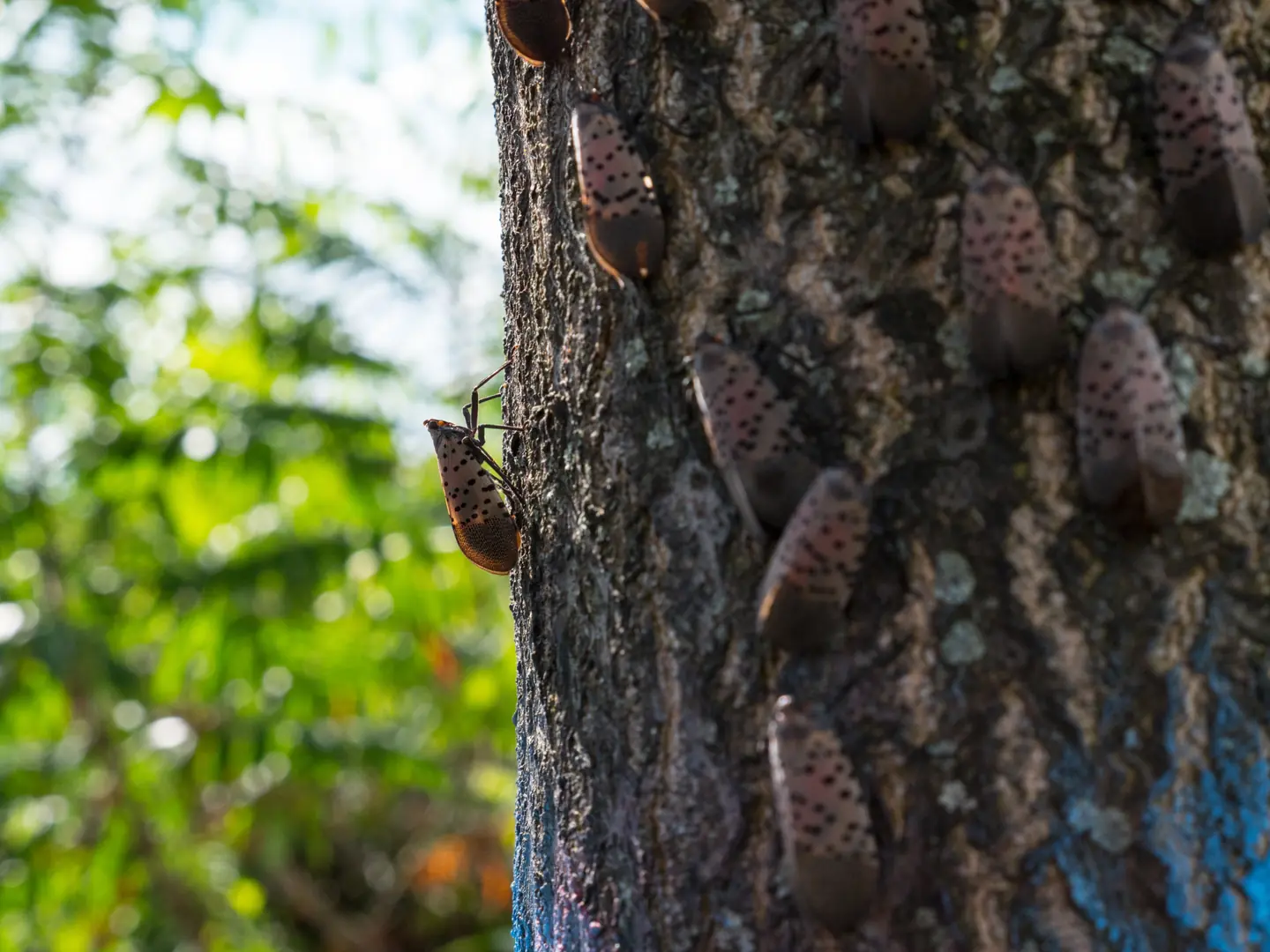
A people-powered campaign against invasive species
Invasive species spread one backyard at a time. So does the response.
Lantern Hunt is a free iPhone app that helps people find, remove, and record spotted lanternflies wherever they live. It is the first step toward a platform that connects the people removing invasive species with the agencies, landowners, and sponsors working to stop them.
Since launch
Already at work in six states.
- Verified spotted lanternfly kills
- 2,000+
- Geolocated, approved submissions
- 1,100+
- States reached
- 6
As of
The first target · Lycorma delicatula
The spotted lanternfly is spreading. The people who see it first can help.
The spotted lanternfly was first detected in the United States in Pennsylvania in 2014. USDA APHIS now reports some degree of infestation in 19 states and the District of Columbia. It feeds on grapevines, hops, stone fruit trees, and hardwoods, and the sticky fluid it leaves behind feeds sooty mold, a black fungal coating that blocks sunlight and keeps the plants beneath from photosynthesizing.
It is also easy to spot once you know what to look for. Adults and late-stage nymphs are hard to miss, and egg masses sit on exposed surfaces such as bark, stone, and outdoor equipment. That makes it a practical first species for people who want to help.
- Native range
- Asia
- First U.S. detection
- 2014, Pennsylvania
- Infested area
- 19 states and the District of Columbia
- Preferred host
- Tree-of-heaven, Ailanthus altissima
- Egg mass
- 30–50 eggs, about 1 inch long
- Generations
- One per year
Sources: USDA APHIS; UMass Extension; University of Illinois Extension.
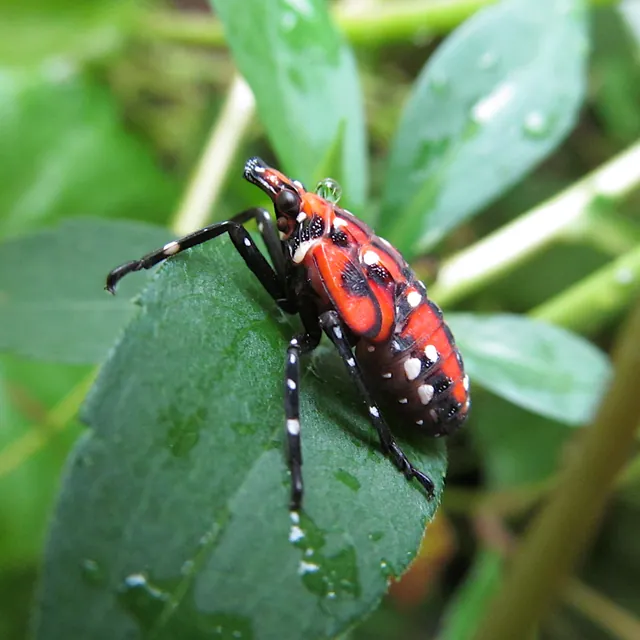
A field tool for finding, removing, and documenting lanternflies.
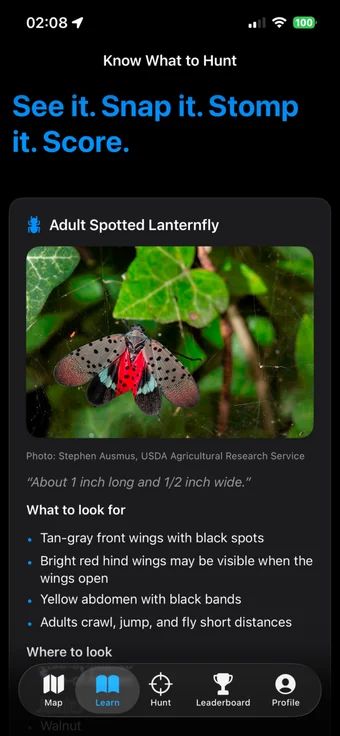
Learn to identify
Identification guides for adults, nymphs, and egg masses, with photos and the features to check.
Find and remove
When you find lanternflies or an egg mass, remove them and record what you found and how many.
Document it
Take a before and an after photo. The app records the location of the removal from your phone.
Get it verified
A person reviews every submission. Approved removals earn points and appear on the community map.
Earn cash rewards
As sponsors fund bounty programs, verified removals will earn money for the species and places those programs target.
Reviewed and private
Every removal is reviewed before it counts.
Each submission carries a before and an after photograph, and a person approves or rejects it. That review is what makes the totals on this site reliable and what would let a sponsor pay for results. Participants’ exact locations are visible only to the reviewer, and the app has no third-party tracking software.
One platform
Individual acts of conservation, turned into one coordinated effort.
Lantern Hunt brings together five things that usually live in separate programs. Four of them are working in the app today. The fifth, financial incentives, is the next stage.
People
Anyone with an iPhone can join. Accounts require no name or email address.
Education
Species guides in the app teach participants what to look for, life stage by life stage.
Photographic verification
Every removal that counts has a before and an after photograph, reviewed by a person.
Geographic data
Approved removals that carry a location show where the species is being found and where it is spreading.
Financial incentives
Partner-funded rewards that vary by species, location, and season, so funders pay most for the removals they care about most.
Together the first four have produced 2,000+ verified spotted lanternfly kills across 6 states, as of October 17, 2026.
A long record
People have been paid to remove harmful species for nearly 150 years.
- Minnesota, 1877
The state paid farmers up to a dollar a bushel for grasshoppers and 50 cents a gallon for their eggs during a locust plague.
- Louisiana, since 2002
Trappers earn $6 for every nutria tail, and nutria damage to coastal marsh has fallen by more than 90 percent.
- Florida, since 2017
Contractors are paid by the hour and by the foot for Burmese pythons and have removed more than 11,000.
- Japan, 1993–2024
Bounty trappers and then a professional team removed more than 32,000 mongooses, and Amami-Ōshima was declared mongoose-free.
Where this goes
From one species to a national response network.
The Lantern Hunt app is the foundation. The plan is a platform where ordinary people anywhere can take part, have their removals verified, and be connected with the organizations that need invasive species removed and are willing to pay for it. These pieces are in development.
More species
Five candidates already meet our tests, from Scotch broom in the Pacific Northwest to garlic mustard in eastern woodlands. See them
Professionals alongside the public
Qualified removal professionals for work that calls for training, equipment, or permits, coordinated with volunteer effort.
Funded campaigns
Governments, businesses, and organizations sponsoring removal in the places they care about, with incentives paid for verified results.
Geographic data that tracks invasive species
Removal records with locations that land managers and agencies can use to see where invasive species are turning up and where they are spreading.

For partners
Fund a campaign. Pilot a program. Bring your land into the effort.
We are looking for first partners: vineyards and landowners dealing with spotted lanternflies, conservation organizations, sponsors, and public agencies.
A Pennsylvania vineyard, shown for illustration; not a Lantern Hunt partner. Photo credit